eAMS: Asset Management
Optimizing Medical Equipment Lifecycle
A comprehensive web-based tool for monitoring the location, status, and maintenance history of costly medical equipment. Ensuring budget optimization and reducing downtime across health facilities.
Supporting 500+ Public Hospitals
eAMS is currently deployed across all district and sub-district hospitals in Bangladesh, safeguarding millions of dollars in essential medical equipment and ensuring readiness for patient care.
System Interface
A dual-view approach: High-level analytics for decision makers and detailed registry tools for facility managers.
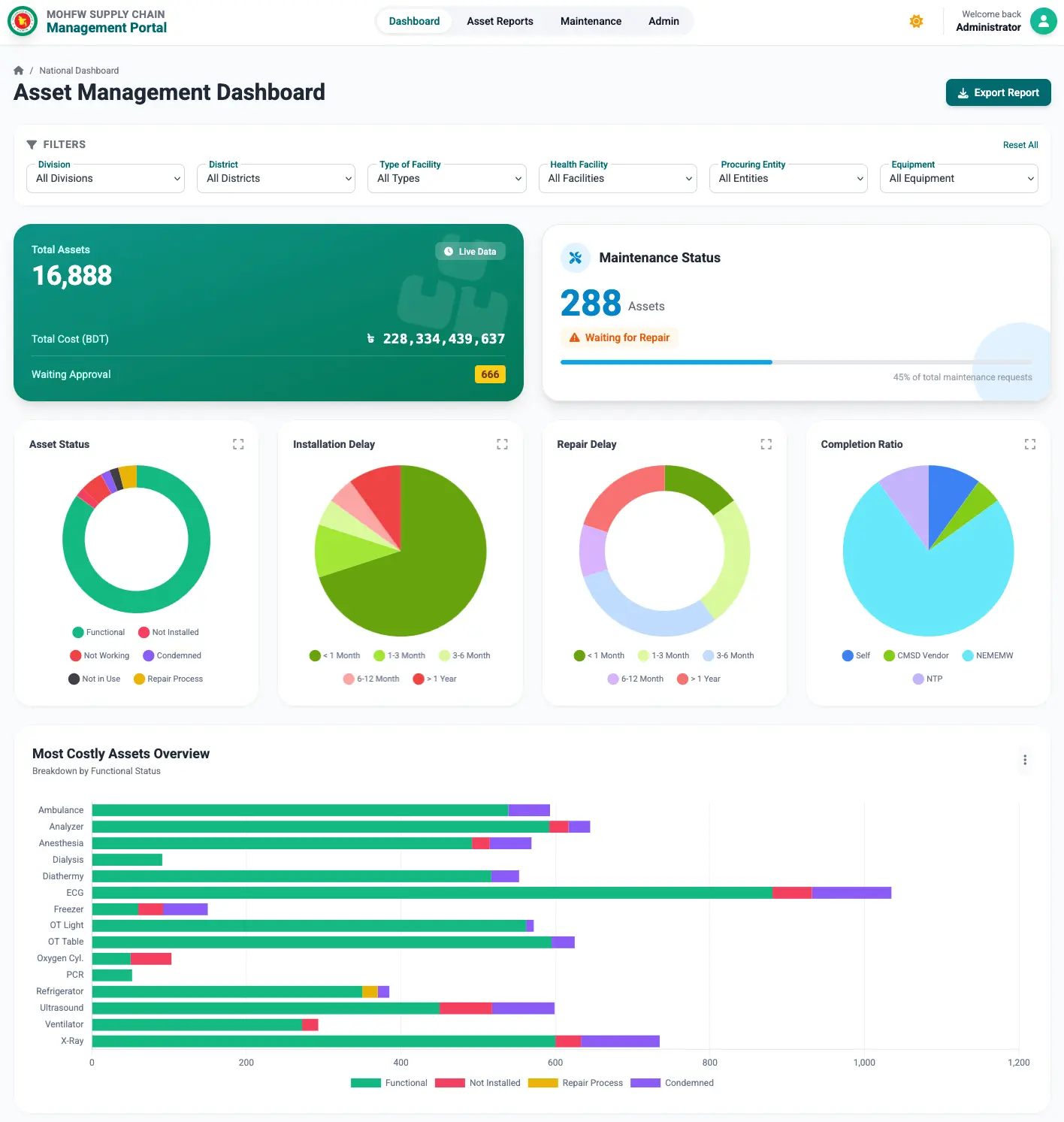
Real-Time Dashboard
Provides a bird's-eye view of equipment functionality status (Functional vs. Down), warranty expiration alerts, and preventive maintenance schedules across the entire network.
- Monitor downtime ratio
- Track budget allocation
- Identify high-failure models
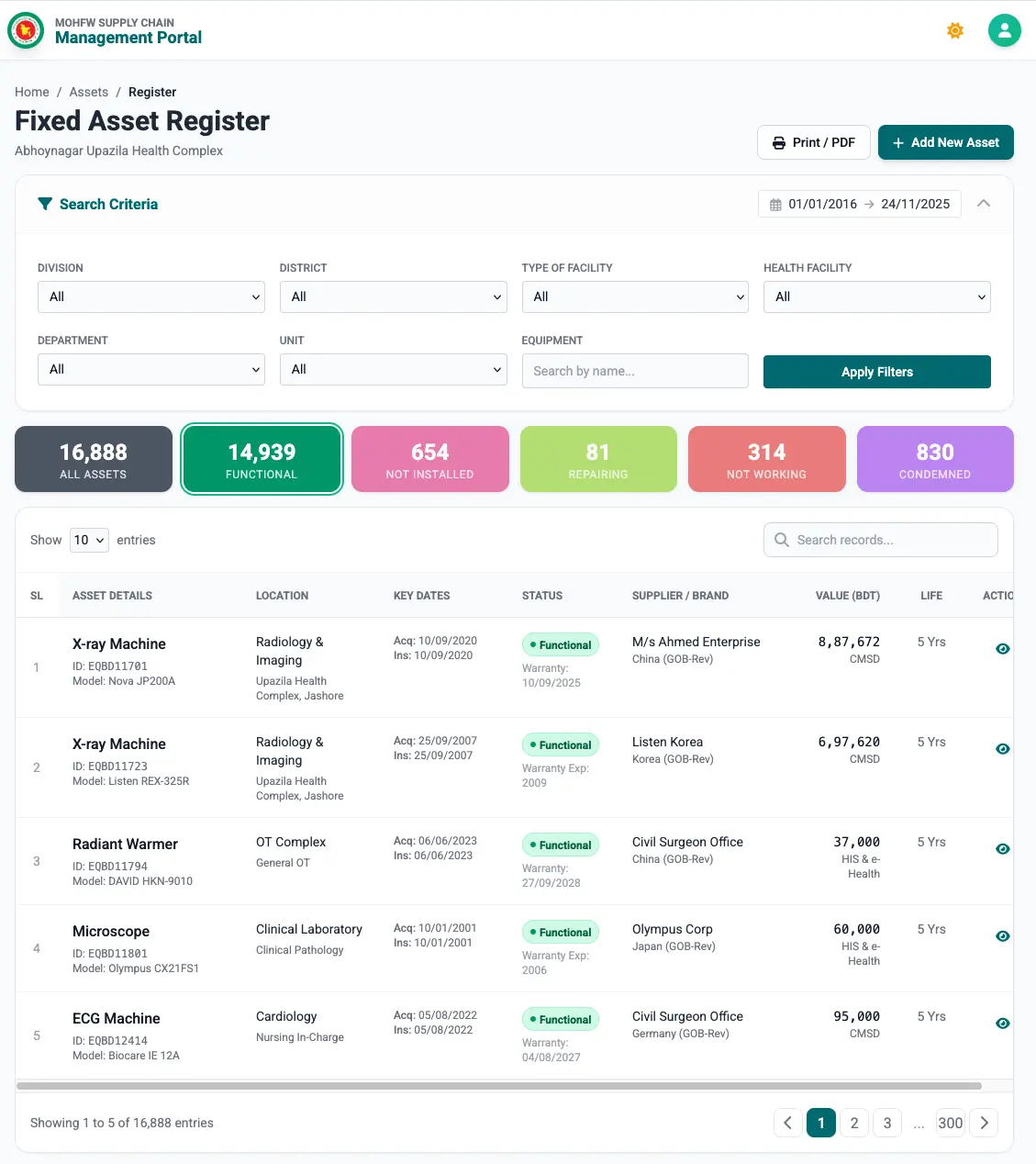
Digital Asset Registry
A granular inventory system where every device—from X-ray machines to ventilators—is tracked. Details include serial number, location, supplier info, and service history.
- QR/Barcode Integration
- Service Ticket Management
- Transfer & Condemnation
Core Functionalities
Maintenance Management
Schedules preventive maintenance and tracks corrective repair requests. Ensures equipment uptime is maximized.
Location Tracking
Pinpoints the exact location of assets within a facility (e.g., ICU, Ward 3). Reduces "lost" equipment incidents.
Smart Identification
Supports unique asset ID generation with QR code and barcode compatibility for rapid scanning via mobile app.
Depreciation & Valuation
Automatically calculates asset depreciation over time, aiding in accurate financial reporting and replacement planning.
Warranty Alerts
Automated notifications before warranty or service contract expiry, allowing timely renewal and vendor accountability.
Procurement Planning
Uses historical data on breakdown frequency and lifespan to inform smarter purchasing decisions for future equipment.